
Getting Your First Dance Class of the Season Right as a Dance Educator
GET STARTED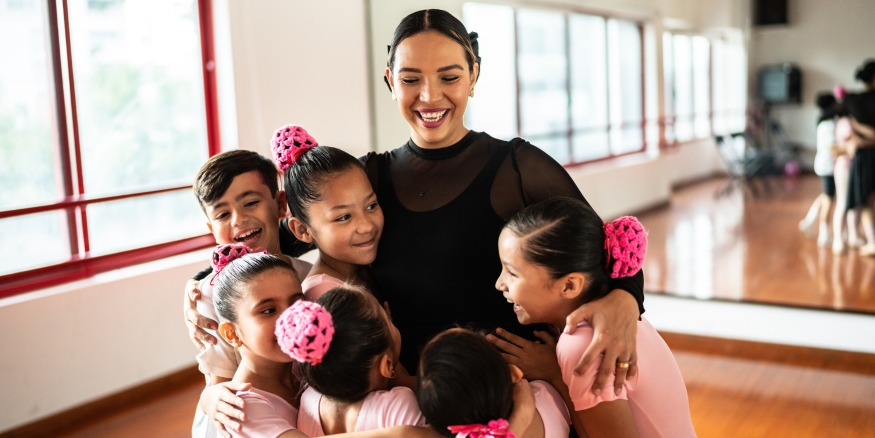
Stepping into the studio for your first class of the season as an educator can be simultaneously exciting and nerve-wracking. You are setting the tone for your students’ experience of dance and of you as their guide. A successful first class establishes the level of trust, energy, and structure that will be carried throughout the entire season. Whether you’re teaching tiny dancers their first steps, or pre-professional teens who are training for competitions and more, here are some strategies to help you get it right.
1. Set the tone of your classroom space
Your students will remember how you made them feel long before they remember a single step or concept you taught. Greet each dancer with warmth and excitement towards getting to know them, introduce yourself confidently and clearly, and explain how you will be running your classroom and what your expectations will be. Ensuring that the students feel connected with you and each other as quickly as possible sets the tone of a safe space for them to show up fully.
2. Be forthcoming with classroom rules
Establishing classroom etiquette right away for both yourself and the dancers allows a quick understanding of what their weekly environment will be like. It does not need to feel rule-heavy or overly strict, but clear so that the dancers know what they will be walking into for class. For example, explaining that we raise our hands to ask questions or speak, but that they have autonomy to use the restroom without asking gives them necessary information about when conversation in class is needed.
3. Plan well, but stay flexible
Teaching dance is not one-size-fits-all all, and that includes every classroom you will walk into. Ensuring that you have prepared a few options for any given class is imperative in running a successful room. Having a clear structure, ie, warm-up, technique, across-the-floor, choreography, can be a helpful guide for both you and your students, but also making sure you are prepared to toss that plan in the air if something different is needed. Allowing for flexibility in your classroom ensures that your students get what they need from your space, even if it was not the original plan for the day.
4. Balance Authority with Encouragement
Striking a proper balance between being approachable and still maintaining a respectful classroom is imperative. Confidence in your teaching signals to students that they’re in capable hands, but at the same time, your encouragement and enthusiasm let them know you’re rooting for their success. Your classroom needs to be a safe space for students to struggle and still know they are supported, and feel that they are succeeding.
5. Reflect After Class
After every class, take a few minutes for self-reflection. What went well that day? What perhaps needs more work or clarity? Almost all successful teachers take a moment to reflect on how their class went. Give yourself permission to learn and grow; it’s not a moment to berate yourself for anything that didn’t go well, it’s an opportunity to think through how to be even better.
Your first class of the season as a dance educator is about much more than the movement you’ll be teaching this year, it’s about laying the foundation for a supportive, inspiring learning environment that engages both you and your students, and keeps everyone excited to dance!
Author: Emily Bufferd
Emily Bufferd is the Producer of The Young Choreographer’s Festival, an annual NYC event showcasing rising choreographers ages 18–25. She has also taught dance at institutions across the U.S. and abroad. Her choreography has been presented at venues like Jazz at Lincoln Center and Symphony Space, and she has been featured in publications including Dance Spirit and Dance Magazine. Emily lives in New York City and continues to create, teach, and inspire through dance.